I really enjoyed the SIMUN experience. It gave me a better understanding about how things actually go in the United Nations. I think I did pretty well in the simulation. As Russia, I was required to speak pretty often and be involved in each scenario. At first, I was nervous for this, but after the first day, I got the hang of it. My favorite part of SIMUN was going into caucus. It was interesting to be able to informally communicate with other delegates whether they agreed with me or not. During every caucus, I heard some really good points, and adjusted my stance to fit in with the current happenings. Overall, SIMUN was a really fun three days.
The part of SIMUN that was not fun at all was the preparation. It was rather time consuming and not always the most interesting. I did, however learn a good amount of interesting useful information. The most helpful part of the graded preparation was the research on the four prep questions. Since they were directly related to the scenarios we were doing, they helped me the most when it came to the actual simulation. Sometimes, during that research, it was hard to find reliable resources to use. I never realized how many inaccurate websites there were. Most of the websites on the handouts we received were helpful in researching both the scenario background and my country’s recent history. I learned very much about Russia I never knew before, especially how they would respond in certain world crises, which is really the most important information to know going into the simulation. Reading over and memorizing Parliamentary Procedure was also a main part of my preparation, and one of the things I was most nervous about going in. The day right before SIMUN, when we did a mock crisis in class really helped with the procedure and what to say when.
For SIMUN next year, there are couple more things I would research. The main one would be to find all my countries allies and enemies and make sure I know who they are when we get to the simulation. This year, I knew Russia’s main allies and enemies, but not all of them. Knowing this would have helped me when it came to recruiting the smaller countries to join my side of the argument. I would have known how to better convince them and which ones to target in the first place. SIMUN was a very good experience, and after my first year of SIMUN, I am seriously considering attending MAMUN next year.
Friday, April 30, 2010

Wednesday, April 21, 2010
SIMUN blog
Responding as a Russian delegate:
As Russia in this situation, I am starting to prepare my army, but as of now, have no plan to send troops into Pakistan. I am going to focus mainly on my own country and the security of my government, people, and own nuclear weapons. I do not have any problems with the United States stepping in to control this chaotic situation, but rather support their decision. I think someone needed to step in just as the United States did. Some would say this was a violation of Pakistan’s sovereignty, but without that extra support, there is no doubt that the Taliban would succeed in their efforts and end up with the nuclear weapons. This would most likely be the end of the world as we know it.
If anything, I am worried that the terrorist and rebel groups in Chechnya might get some idea from the Taliban. They might try a similar tactic to retrieve nuclear weapons, jeopardizing the stability of my government and my citizens’ lives. Although they probably wouldn’t attempt to overthrow my government, they may go after an easier target and then threaten me with their newly acquired weapons. I am mostly preparing my armed forces for the possibility that this situation does elevate and start to spread. If the Taliban did end up with Pakistan’s nuclear weapons, I would be much more concerned for the safety and security of my country than I am now. At this time, however, I am preparing my forces to fight just in case, and to show Chechnya that I will not be an easy target.
As Russia in this situation, I am starting to prepare my army, but as of now, have no plan to send troops into Pakistan. I am going to focus mainly on my own country and the security of my government, people, and own nuclear weapons. I do not have any problems with the United States stepping in to control this chaotic situation, but rather support their decision. I think someone needed to step in just as the United States did. Some would say this was a violation of Pakistan’s sovereignty, but without that extra support, there is no doubt that the Taliban would succeed in their efforts and end up with the nuclear weapons. This would most likely be the end of the world as we know it.
If anything, I am worried that the terrorist and rebel groups in Chechnya might get some idea from the Taliban. They might try a similar tactic to retrieve nuclear weapons, jeopardizing the stability of my government and my citizens’ lives. Although they probably wouldn’t attempt to overthrow my government, they may go after an easier target and then threaten me with their newly acquired weapons. I am mostly preparing my armed forces for the possibility that this situation does elevate and start to spread. If the Taliban did end up with Pakistan’s nuclear weapons, I would be much more concerned for the safety and security of my country than I am now. At this time, however, I am preparing my forces to fight just in case, and to show Chechnya that I will not be an easy target.
Friday, April 16, 2010
Joy Luck Club freewrite
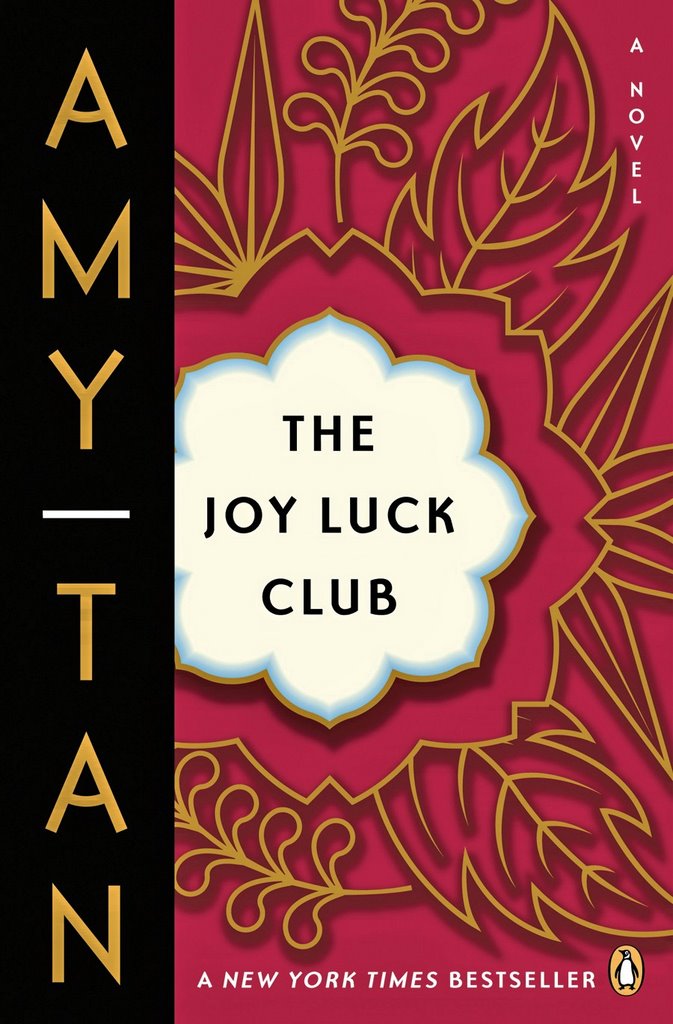
Much of the culture revolves around women being inferior. They believe that every woman should be a good wife, taking care of her husband’s every need. Women cannot express any opinions or wants they have. This would be considered selfish. All the mothers of the Joy Luck Club were raised on that kind of thought. They still follow it now that they have come to California. The daughters, however, have been exposed to a more modern world where women actually have a say in things and are almost completely equal with men. They have a hard time convincing their moms that this new way is acceptable as well as the traditional way of thinking.
Divorce is generally not an option to the mothers of this story. Most of the daughters are having marital problems and really have nowhere to turn but divorce. As each of the daughters tells her mom, accusations come out as to why the marriage has failed. Most of these ideas occur in the daughters’ heads. They remember little superstitions their mothers had told them as little girls. For example, every grain of rice you don’t eat will make a pockmark on your husband. The more pockmarks a man has, the worse of a man he is. At first glance, this is a way to get kids to finish eating. However, as her marriage is falling apart, one of the daughters remembers this, and how she reacted when her mom first told her. She starts to blame all her problems on this theory.
Wednesday, March 31, 2010
High Jump

“Koessler in the hole,” the official announced. I got up, really in the zone now. As I took off my sweats, the icy breeze stung my bare legs.
*Clang* I heard the bar hit the ground. “Yes!” I thought. Now I just had to jump one other girl and I had the win.
“Murphy up; Koessler on deck.” My last competitor was about to jump. I was only focused on myself, however. I couldn’t even watch her. I was turned away from the high jump pit, stretching on the ground. Finally, after what seemed like an eternity, I heard Mary Murphy start her approach towards the bar. But then: nothing.
“Oh no,” I thought, “She made it over.” I turned to check on my suspicion, but my opponent was walking back to her mark. She hadn’t even jumped yet. She approached again. But she didn’t jump. I knew exactly what she was thinking. I do the same thing when I approach higher heights. I just psych myself out when I know I am going for a height I haven’t cleared before. As much as I try to tell myself I can do it, as I am sprinting my fastest around the “J” curve towards the bar, my mind tells me I can’t do it. I knew she was doing the same thing.
I, however, was not gaining anything from her delay. Freezing cold and slight rain are not the best conditions to jump in, especially at the CYO Championship Meet. I had so much riding on this one meet. Everyone was expecting me to win and I going for a personal record.
Mary approached the bar again, and again turned away. She looked to her coach for help. He gave her a quick pep talk, she only had two minutes to complete her jump or she would automatically forfeit. She went to her mark, ran, and jumped, rather pitifully, not getting anywhere close to clearing it. I was so happy inside I could barely contain myself. But I knew I had to stay focused. I still had a record to chase.
I was nervous as I stepped up to my mark. This was my third attempt at 4’11”, a height I usually easily clear. I ran, jumped my hardest, driving my knee and throwing my arm up. I arched, piked, and landed on the mat. I cleared it. Everyone watching started cheering, but I still wasn’t done. Now I got to choose by how much the bar moved up.
“Five feet,” I announced. They moved the bar up. This was my personal record – on a good day with nice weather. I decided I just needed to go for it as hard as I possibly could. At this point, there were not many other events going on. Many people were crowded around the high jump, not making it any easier. I knew many people were cheering for me, and my coaches must have been yelling instructions at me, but I tuned everything out. I had to focus. I jumped and made it over. It felt effortless, and I was ready to go for a new height.
As they moved the bar up, I was trying to stretch and stay warm. Now it was time to focus. I couldn’t psych myself out. Not now. I stepped up to my mark. The whole area became silent. I started running. Counting steps. Turned the corner. Three more steps. Plant left foot. Drive right knee. Throw my body in the air. Arch. Head back. Pike. Hit the mat. I immediately jumped up, full of adrenalin. The silence was broken by the sudden outburst of cheering. I got my personal record, won the championship, but most importantly, fulfilled my own goal.
Thursday, February 25, 2010
Olympics

I love watching the Olympics. I wish they were on more often. Starting from the Opening Ceremony every two years, it seems like the excitement never stops. Personally, I like the Summer Olympics better than the Winter Olympics. My favorite events to watch are the gymnastics, swimming, and especially the track and field. Being a high jumper and runner, I am fascinated by these athletes, and strive to be like them. I had the privilege of watching history be made at the Beijing Summer Olympics in 2008. With Michael Phelps winning a record eight gold medals in one year, and both the opening and closing ceremonies being the biggest ever, it was truly a privilege to witness. Beijing was really the first Olympics I actually paid attention to. Before that I may have watched them, but I never really cared or followed the results.
I have been following the Vancouver Olympics even more carefully. There are many really cool websites that keep track of things like the medal count. I really enjoy following that, along with some individual events. My favorite winter sports are pair’s figure skating, snowboard half pipe, and short-track speed skating. I’m not quite sure which one I like the most. I like figure skating because I think I could probably do most of the tricks they do, however I can’t get how they are able to do anything on the ice. I have no skating coordination whatsoever. I like pairs the best because they can do so many more things with two people like throws and lifts. The half pipe is really just amazing to me. I have never tried to snowboard, but I’m pretty sure it would be a disaster. Then they combine that with all the flips, twists, and grabs, I truly find it unfathomable. I really enjoy short track because it is one of the only events in the winter games that isn't against judged or racing the clock. By the final round, all the competitors are racing right next to each other, at the same time.
The excitement always keeps you on the edge of your seat. For example, in the finals of the men’s 1500 meters, it seemed as if the podium was out of reach for the Americans. However, at the last second, the Koreans in the second and third spots collided and fell. Korea took gold, and the U.S. took both silver and bronze. It is the excitement that draws me to watch this sport. Overall, the Olympics are a really great event and I am already looking forward to the 2012 London Summer Games.
Thursday, February 18, 2010
Big Fish
“Ouch!” I screamed as I hit the ground. All I could think about was my throbbing ankle. Everyone in the gym came running over to me, they were all laughing, including Mrs. Blackmer. I couldn’t figure out what was so funny. Apparently Natalie couldn’t either. She was standing over me, a shocked look on her tan face. I saw a hand reach out to me, as if to help me up, but there was no way I was going to stand right now.
“What just happened?” Natalie asked.
“I don’t know…my ankle…” I responded.
“Come on, get up,” Mrs. Blackmer said.
“I can’t,” I said still confused and in an extreme amount of pain.
“That was the loudest snap I have ever heard,” Natalie exclaimed. “Did anyone else hear that?”
“That was your ankle?” Mrs. Blackmer said in disbelief. She went running for an ice pack as she told a few other girls to carry me to the bench. She instructed me to take my shoes off. Her background as an athletic trainer allowed my gym teacher to assess my injury. My right ankle was already swollen; it was the size of a baseball. I couldn’t move it at all.
Why did I have to be the one to get hurt? I thought to myself. Especially on the last day on gym class in eighth grade, I can’t think of anything much worse. I should never have gone for that dunk.
See, we had been playing a friendly game of basketball. I got the rebound of a missed shot and raced down the court for the breakaway. This was a fun game, so as I was approaching the basket, I decided to go for a dunk. I had done it plenty of times before, and I knew I could successfully complete it. I jumped up, dunked the ball, and the next thing I know I am on the ground, and all I know is that my ankle hurts. It turns out, as I broke away, everyone on the court came running after me. My teammate, Natalie, was watching the ball as I jumped. She couldn’t stop her momentum and her shoulder hit my left leg. I landed hard on my right leg and my ankle snapped.
As I was sitting on the bench, with ice on my still-throbbing ankle, watching the others play, reality hit me.
I won’t be able to dance! I thought. In a split second, a huge part of my life was eliminated. Nationals were coming up soon, and I could tell I now wouldn’t be able to compete. I felt terrible. Then, the rest of my upcoming end of the year activities came into mind; May Crowning, Confirmation, graduation, our Cedar Point trip, and my dance banquet. I didn’t know how I could participate in any of those things that I had looked forward to for months.
I went to the hospital after school, and found that I had crushed my ankle bone. I left in tears, in a wheel chair with instructions to come back in a week for surgery. I was completely devastated. I was able to attend all my events, just not quite the way I wanted to. I still went to Chicago to watch my studio compete at Nationals. Looking at the bright side of my painful situation, at least my friends and I didn’t have to wait in line for any rides at Cedar Point.
“What just happened?” Natalie asked.
“I don’t know…my ankle…” I responded.
“Come on, get up,” Mrs. Blackmer said.
“I can’t,” I said still confused and in an extreme amount of pain.
“That was the loudest snap I have ever heard,” Natalie exclaimed. “Did anyone else hear that?”
“That was your ankle?” Mrs. Blackmer said in disbelief. She went running for an ice pack as she told a few other girls to carry me to the bench. She instructed me to take my shoes off. Her background as an athletic trainer allowed my gym teacher to assess my injury. My right ankle was already swollen; it was the size of a baseball. I couldn’t move it at all.
Why did I have to be the one to get hurt? I thought to myself. Especially on the last day on gym class in eighth grade, I can’t think of anything much worse. I should never have gone for that dunk.
See, we had been playing a friendly game of basketball. I got the rebound of a missed shot and raced down the court for the breakaway. This was a fun game, so as I was approaching the basket, I decided to go for a dunk. I had done it plenty of times before, and I knew I could successfully complete it. I jumped up, dunked the ball, and the next thing I know I am on the ground, and all I know is that my ankle hurts. It turns out, as I broke away, everyone on the court came running after me. My teammate, Natalie, was watching the ball as I jumped. She couldn’t stop her momentum and her shoulder hit my left leg. I landed hard on my right leg and my ankle snapped.
As I was sitting on the bench, with ice on my still-throbbing ankle, watching the others play, reality hit me.
I won’t be able to dance! I thought. In a split second, a huge part of my life was eliminated. Nationals were coming up soon, and I could tell I now wouldn’t be able to compete. I felt terrible. Then, the rest of my upcoming end of the year activities came into mind; May Crowning, Confirmation, graduation, our Cedar Point trip, and my dance banquet. I didn’t know how I could participate in any of those things that I had looked forward to for months.
I went to the hospital after school, and found that I had crushed my ankle bone. I left in tears, in a wheel chair with instructions to come back in a week for surgery. I was completely devastated. I was able to attend all my events, just not quite the way I wanted to. I still went to Chicago to watch my studio compete at Nationals. Looking at the bright side of my painful situation, at least my friends and I didn’t have to wait in line for any rides at Cedar Point.
Wednesday, February 10, 2010
Currency Concerns

The United States is right in pressuring China to raise the value of its currency.
China’s willingness to adjust the value of the renminbi would also probably better the overall relationship between the United States and China. “Internet censorship, hacking attacks directed at American companies, arms sales to Taiwan and the pending visit of the Dalai Lama to Washington have all cropped up in the last month as points of conflict,” Wong and Landler of The New York Times say. For the past few months, the Obama administration has been trying to pressure China to cooperate with the United States and the U.N.’s efforts on many occasions. China just keeps doing things on its own. These decisions by both sides keep increasing tension within the extremely intertwined relationship. If China was to agree to raise the value of the renminbi, it may relieve some of the tension between these two major world powers. The cooperation of China with the U.S. and the U.N. would make world efforts much easier.
Subscribe to:
Posts (Atom)